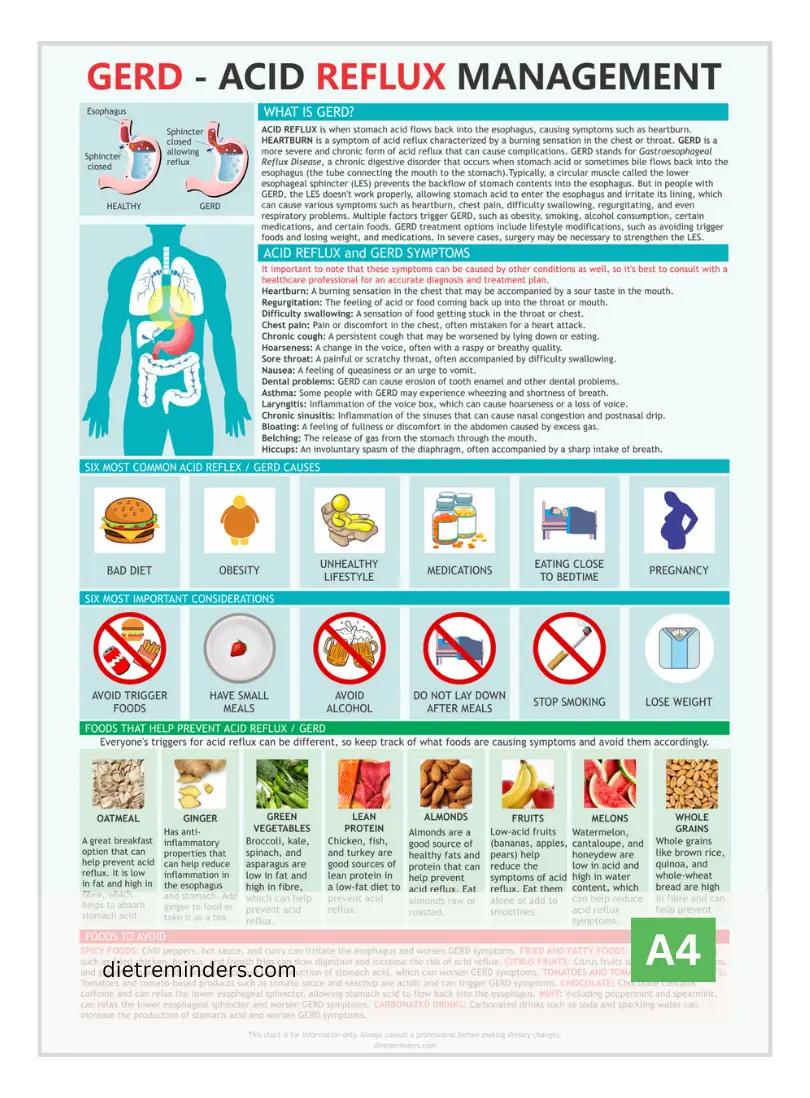
Comprehensive GERD – Acid Reflux Management Chart covering anatomy, symptoms (heartburn, regurgitation, chest pain, chronic cough, difficulty swallowing), six common causes (diet, obesity, lifestyle, medications, eating timing, pregnancy), six important considerations (trigger foods, meal size, alcohol, positioning, smoking, weight), foods that help (oatmeal, ginger, lean protein, fruits, whole grains), and foods to avoid. A4 printable PDF, instant download.
$4.00
Take control of GERD and acid reflux with this comprehensive management chart—your essential visual guide to understanding gastroesophageal reflux disease, recognising symptoms, identifying triggers, implementing lifestyle modifications, and making strategic dietary choices that reduce heartburn, protect your esophagus, and improve quality of life naturally.
This professionally designed educational reference combines medical information with practical strategies, featuring anatomical illustrations, symptom identification, common causes, important lifestyle considerations, and extensive lists of foods to enjoy versus foods to avoid—empowering you to manage GERD effectively through informed daily decisions.
Understanding GERD:
What is GERD? Acid reflux is when stomach acid flows back into the esophagus, causing symptoms such as heartburn. Heartburn is a symptom of acid reflux characterised by a burning sensation in the chest or throat. GERD is a more severe and chronic form of acid reflux that can cause complications. GERD stands for Gastroesophageal Reflux Disease—a condition where stomach acid frequently flows back into the esophagus (the tube connecting the mouth to the stomach).
The chart includes anatomical diagrams showing healthy esophagus versus GERD-affected esophagus with sphincter closure problems. Typically, a circular muscle called the lower esophageal sphincter (LES) prevents the backflow of stomach contents into the esophagus. But in people with GERD, the LES weakens or relaxes inappropriately, allowing stomach acid and partially digested food to flow back, which can cause various symptoms such as heartburn, chest pain, difficulty swallowing, regurgitation, and even respiratory problems. Multiple factors trigger GERD, such as obesity, smoking, alcohol consumption, certain medications, and certain foods. GERD treatment options include lifestyle modification (avoiding trigger foods and losing weight), and medications. In severe cases, surgery may be necessary to strengthen the LES.
Acid Reflux and GERD Symptoms:
Important to note that these symptoms can be caused by other conditions as well, so it's best to consult with a healthcare provider for proper diagnosis and treatment:
Six Most Common Acid Reflux/GERD Causes:
Six Most Important Considerations:
Foods That Help Prevent Acid Reflux/GERD:
Everyone's triggers for acid reflux can vary, so keep track of which foods cause symptoms and avoid them accordingly.
Oatmeal: A great breakfast choice. Oatmeal can help absorb stomach acid and reduce reflux. It is low in fat and high in fibre, both of which help to absorb stomach acids.
Ginger: Has anti-inflammatory properties that can help reduce inflammation in the esophagus and stomach, which can help prevent acid reflux.
Green Vegetables: Broccoli, kale, asparagus, and other leafy greens are low in fat and high in fibre, which can help prevent acid reflux.
Lean Protein: Chicken, fish, and turkey are good sources of lean, low-fat protein in a low-fat diet to help prevent acid reflux.
Almonds: Almonds are a good source of healthy fats and fibre, which can help prevent acid reflux. Eat them raw or roasted.
Fruits (Low-Acid): Bananas, apples, pears can help reduce symptoms of acid reflux. Choose ripe or add to smoothie.
Melons: Watermelon, cantaloupe, and honeydew are low in acid and high in water content, which can help reduce acid reflux symptoms.
Whole Grains: Whole grains like brown rice, quinoa, and whole-wheat bread are high in fibre and help prevent acid reflux.
Foods to Avoid:
Foods that can trigger acid reflux include those that are high in fat, such as fried foods, fatty meats, and full-fat dairy products. These foods can relax the muscles that prevent acid from flowing back into the esophagus, leading to increased symptoms. Foods that are acidic in nature, such as citrus fruits and tomatoes, can also trigger acid reflux. Spicy foods, such as chilli peppers and hot sauce, can irritate the esophagus and increase the risk of acid reflux. Citrus Fruits: Citrus fruits like oranges and grapefruits are highly acidic and can increase the production of stomach acid, which can worsen GERD symptoms. Tomatoes and Tomato-Based Products: Tomatoes and tomato-based products, such as tomato sauce and ketchup, are acidic and can trigger GERD symptoms. Chocolate: Chocolate contains caffeine and can relax the lower esophageal sphincter, allowing stomach acid to flow back into the esophagus. Mints, Including peppermint and spearmint, can relax the lower esophageal sphincter and increase the risk of acid reflux. Carbonated Drinks: Carbonated drinks such as soda and sparkling water can increase the production of stomach acid and worsen GERD symptoms.
Perfect For:
Format: High-resolution printable PDF, A4 size (297×210mm) Delivery: Instant digital download
You can print on your printer or order a high-quality print from your local print shop. Have the print framed and display it in your home or office. A quality printout of this iconic image will also make a valuable gift.
Digital Download – Instant Access
You can view our digital PDF files on your desktop, phone, or tablet, or print them as often as needed—either at home or through a professional printing service. Bundles containing multiple files are delivered as a single ZIP file.
Upon purchase, you will receive an email with a download link immediately. If it doesn't arrive, please check your junk or spam folder. Still can't find it? Reach out via the CONTACT page, and we'll promptly resend the file as an email attachment.
Please note that we do not accept returns on digital products. Once you receive the download link, the product has been delivered and cannot be returned. By downloading the file, you acknowledge that your right of withdrawal is waived as the digital content has been delivered. If you have a specific issue, please contact us and we will definitely consider your case.
All products are delivered as high-resolution PDF files optimized for printing. Lost your download? Contact us within 30 days for a re-download link.
Our charts and lists are provided for informational purposes only and are not a substitute for professional healthcare advice. Always consult with qualified healthcare providers regarding any health concerns or before making significant dietary changes. While we strive for accuracy, nutritional information may change and should be verified for critical applications.
We respect your privacy and are committed to protecting your personal information. We collect only the essential details needed to process your order and deliver your digital products. Your information is never sold or shared with third parties.
If you experience any technical issues with downloading or accessing your files, please contact us immediately through our CONTACT page. We're here to help ensure you receive your purchase successfully.
All products are copyrighted by dietreminders.com. Files are for personal use only and may not be redistributed or resold. If you're a health professional interested in using our charts in your practice, please contact us about commercial licensing options.

